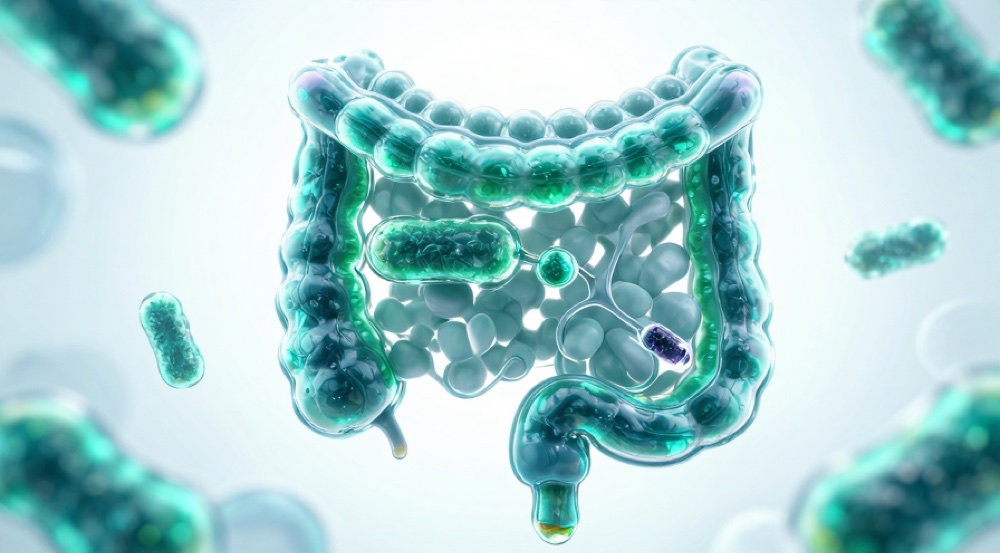
Fibre and gut health is the most-searched pairing in nutrition, and for once the hype is earned. Dietary fibre is the primary food for your gut microbes, and what they make from it — short-chain fatty acids — is one of the clearest molecular links in the whole gut-brain axis.
What fibre does in the gut
Fibre is the part of plants you cannot digest — but your microbes can. In the colon, bacteria ferment fibre into short-chain fatty acids, chiefly acetate, propionate and butyrate. Butyrate is the preferred fuel of the cells lining your colon, helps maintain the gut barrier, and supports a well-regulated immune response.[1] A low-fibre diet, by contrast, starves these microbes — and a starved microbiome is a less diverse, less resilient one.
The line to the brain
Short-chain fatty acids do not stay in the gut. They influence the vagus nerve, help regulate inflammation, and support the integrity of the blood-brain barrier — the brain's own gatekeeper.[1][2] Reviews of gut-brain communication place SCFAs among the most important microbial signals reaching the brain, shaping stress reactivity and, in animal models, behaviour.[2][3] When people ask how eating more fibre could possibly affect mood, this is the answer: fibre feeds the microbes that make the molecules that talk to the brain.
Fibre is not a brain nutrient directly. It is food for the microbes that manufacture brain-active signals. That indirect route is exactly what makes the gut-brain axis so powerful.
How to get more (without the bloat)
Most people eat far less fibre than recommended. Build up gradually — a sudden jump causes gas as your microbes adjust — and aim for variety: different fibres feed different microbes. Good sources include oats and whole grains, beans and lentils, vegetables, fruit (with skins), nuts, seeds, and prebiotic-rich foods like onions, garlic, leeks and slightly-green bananas. Drink water alongside.
Fibre, prebiotics, and personalisation
Certain fibres are also prebiotics — selectively feeding beneficial species. But which fibres help you most depends on which microbes you already have. To see your own SCFA-producing capacity, Flore offers microbiome testing through partner labs and builds a formula from your data.
Fibre and gut health: why fibre is the master lever
Fibre is the single most important dietary input for the gut microbiome, because it is the fuel your bacteria ferment. When gut microbes break down fermentable fibre they release short-chain fatty acids — chiefly butyrate — that feed the cells lining the colon, reinforce the gut barrier, and act as signals in the gut-brain axis (Makki et al., 2018, PMID 29902436). Persistently low-fibre diets are linked to lower microbial diversity, an effect that compounded across generations in mice (Sonnenburg et al., 2016, PMID 26762459).
Pre- and probiotics: how they fit with fibre
People often search "pre and probiotics" together. A prebiotic is a substrate — usually a fermentable fibre — that your beneficial bacteria selectively use (Gibson et al., ISAPP 2017, PMID 28611480); a probiotic is a live beneficial microbe (Hill et al., ISAPP 2014, PMID 24912386). Fibre is the main dietary prebiotic — see prebiotics vs probiotics for how they work together.