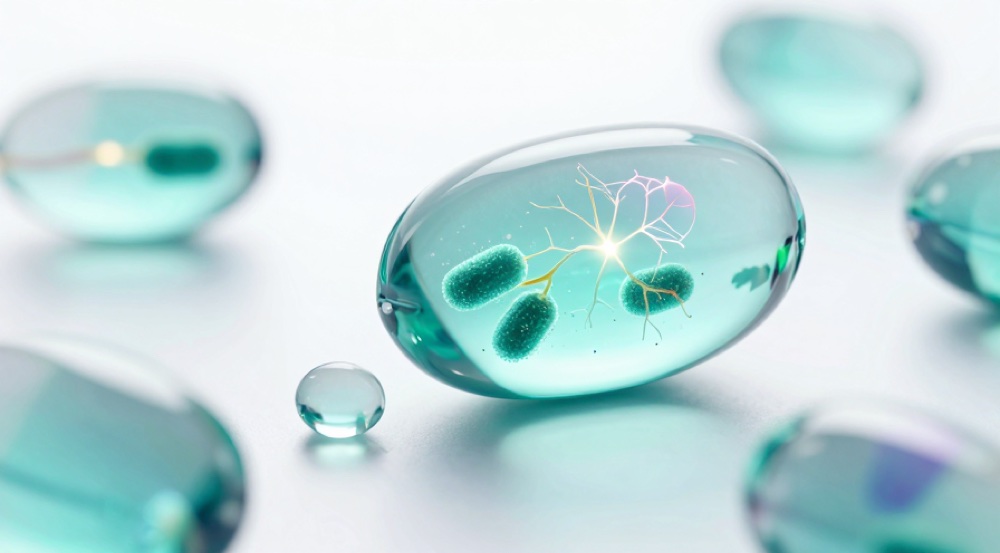
The term "psychobiotic" was coined in 2013 by Timothy Dinan, Catherine Stanton and John Cryan of University College Cork. In Biological Psychiatry, they defined a psychobiotic as "a live organism that, when ingested in adequate amounts, produces a health benefit in patients suffering from psychiatric illness."[1]
Their proposal rested on preclinical work showing that specific bacterial strains could alter stress hormones, inflammation and brain neurochemistry in animals. Dinan and colleagues argued these effects were plausibly relevant to depression and anxiety — that certain probiotic strains might function as a genuinely novel class of psychotropic agent rather than as generic digestive aids.[1]
Why "strain-specific" matters
The definition was deliberately strain-specific and dose-dependent, mirroring the definition of a probiotic. That framing drew a line between vague "gut feeling" claims and a testable hypothesis: a named organism, at a stated dose, producing a measurable psychological outcome. The concept has since been broadened by some researchers to include prebiotics and other gut-brain interventions, but the 2013 definition remains the field's reference point.
From psychobiotics to neurobiome-directed interventions
The decade since 2013 exposed the concept's biggest limitation: the neuroactive output of the gut varies enormously from person to person, so a single off-the-shelf strain can't be optimal for everyone. The precision evolution of the idea — sequencing an individual's microbiome first, then targeting the specific neuroactive strains they actually lack — is what Flore calls neurobiome-directed interventions (NDIs). It's the same science, made personal.
Are there psychobiotics for anxiety or low mood?
Certain probiotic strains have been studied for stress-, anxiety- and mood-related pathways — for example the Lactobacillus helveticus R0052 + Bifidobacterium longum R0175 combination, which showed modest signal in human and animal work (Messaoudi et al., 2011, PMID 20974015). Effects are strain-specific and the human evidence is still emerging, so a strain studied for one outcome does not generalize to all. Psychobiotics are a structure-function wellness support — not a treatment or cure for anxiety, depression or any condition. For a personalized path, neurobiome-directed interventions (NDIs) match strains to your own measured microbiome.
To place psychobiotics in the bigger picture, start with the mind-gut connection, then see where fermented foods do and don't earn their reputation in fermented foods and digestion. For a practical plan grounded in real evidence, how to support your gut-brain axis gathers the levers worth your attention.