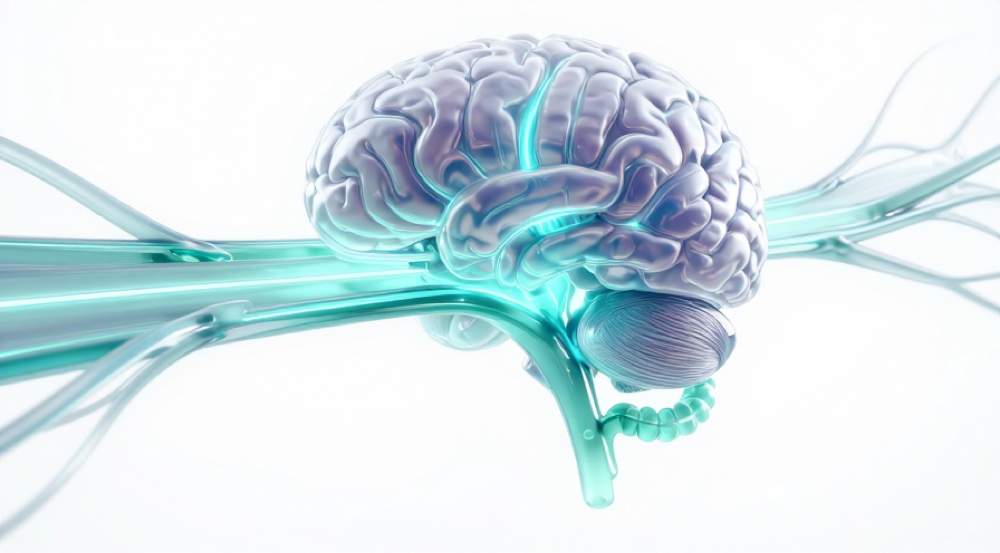
The vagus nerve (also called the vagal nerve) is the main direct neural link between the gut and the brainstem. A counterintuitive but well-established fact: the vagus is predominantly afferent — roughly 80% of its fibres carry information upward, from body to brain. It is primarily a sensory channel through which the gut reports its state to the brain.
The experiment that made the case
The most cited demonstration that microbes signal the brain via the vagus comes from Bravo and colleagues (2011). Feeding healthy mice a specific Lactobacillus rhamnosus strain reduced anxiety- and depression-related behaviours and altered GABA-receptor expression in the brain. The decisive step: when the researchers surgically cut the vagus nerve, these effects disappeared entirely — establishing the vagus as a necessary conduit for that strain's behavioural effects.[1]
Bonaz, Bazin and Pellissier (2018) reviewed the vagus as the interface of the microbiota-gut-brain axis, describing how the nerve senses microbial metabolites and gut hormones and relays that information to brain regions governing mood and stress.[2]
The vagus is a critical route, but not the only one. Some microbial effects persist even without an intact vagus nerve — travelling instead through the bloodstream or the immune system.
Because the vagal nerve carries so much gut-to-brain traffic, it helps explain why an upset stomach can feed anxiety and why a nervous stomach is real physiology. Supporting the microbes that signal along it — through fibre and fermented foods — is one practical lever.
Vagus nerve or vagal nerve — and what is vagal tone?
"Vagus nerve" and "vagal nerve" refer to the same structure — the tenth cranial nerve, the longest of the cranial nerves and the main parasympathetic ("rest-and-digest") line between brain and gut. Vagal tone is a measure of how active that calming line is; higher vagal tone is generally associated with better stress recovery and steadier digestion (Breit et al., 2018, PMID 29593576). Because the vagus is the shared cable of the gut-brain axis, it is the route through which gut signals reach the brain and vice-versa.
How can I support (tone) my vagus nerve naturally?
Everyday practices linked to healthier vagal tone include slow diaphragmatic breathing, regular sleep, movement, and calming routines — and, because the gut end of the nerve is bathed in microbial signals, a well-fed microbiome matters too (Bonaz et al., 2018, PMID 29467611; Breit et al., 2018, PMID 29593576). These are structure-function wellness habits that support normal vagal signalling — not a medical device or a treatment for any disease.
Vagus nerve exercises: the evidence-based short list
Searches for vagus nerve exercises and how to stimulate the vagus nerve are really asking one question: how do I raise vagal tone — the strength of the calming, ‘rest-and-digest’ branch of the nervous system? The most reliably studied lever is breathing. Slow breathing at roughly five to six breaths per minute, with a longer exhale than inhale, increases heart-rate variability, a validated readout of vagal activity (Gerritsen & Band, Frontiers in Human Neuroscience 2018, PMID 30356789). Practices built on slow breathing — paced breathing, meditation, chanting, humming and yoga — share this respiratory-vagal mechanism.
This matters for the gut because the vagus is the main two-way cable of the gut-brain axis, carrying far more signals up from the gut than down to it, and its tone shapes how strongly gut and brain talk to each other (Breit et al., Frontiers in Psychiatry 2018, PMID 29593576). Note the distinction: clinical vagus nerve stimulation is an implanted or transcutaneous medical device used under a clinician; the breathing-based ‘exercises’ above are everyday, structure-function ways to support vagal tone, not a medical device or a treatment for any condition.
The vagus nerve sits at the centre of several everyday patterns worth understanding next: how the gut and sleep feed back on each other in the gut-sleep connection, and what really drives the foggy, unfocused feeling in brain fog and the gut.