Learn the gut-brain axis properly
Everything here is free, cited, and written to be understood rather than to impress. Pick a path below — assess where you are, learn how the axis works, then test it on yourself. You can start anywhere, but most people get the most out of going in that order.
Find out where you actually stand
Six short self-assessments, each scoring a different part of the axis. None are diagnostic — they exist to tell you which thread is worth pulling first.
🧠 Your gut-brain profile
A 60-second self-reflection on the everyday habits linked to gut and brain wellness. It does not measure your...
🌊 Stress & recovery
Stress does not stay in your head — the HPA axis and vagus nerve carry it straight to the gut, and the gut answers...
🌱 Plant diversity
The single strongest dietary correlate of a diverse gut microbiome in the large population studies isn't any one...
🌙 Sleep & your gut clock
Your gut microbes keep time too — their composition and activity swing on a daily rhythm that tracks your light,...
🫙 Fermented foods check
A Stanford trial found a high-fermented-food diet lowered inflammatory markers and raised microbiome diversity where...
🌫️ Brain fog patterns
Brain fog isn't a diagnosis — it's a description, and it has a long list of possible causes. This sorts your version...
4 guided paths through the science
The library holds 46 cited articles, which is a lot to face cold. These are the routes through it that make the most sense — each one reads as a sequence, not a pile.
Start from zero: what the gut-brain axis actually is
If you've only ever met this idea through a supplement ad, start here. What the axis is, the physical wiring that carries it, and why a nervous stomach is the most ordinary evidence of it you already have.
- The Gut-Brain Axis: How Your Microbes and Your Mind Talk 7 min
- The Mind-Gut Connection: How Your Gut Shapes Mood, Stress and Thought 6 min
- Is the Gut Really a "Second Brain"? 6 min
- The Vagus Nerve: The Body's Superhighway Between Gut and Brain 6 min
- Wired for Stress: How Early Microbes Calibrate the Stress Response 6 min
How it works: the actual mechanisms
The part most coverage skips. How microbes make and modulate neurotransmitters, what short-chain fatty acids do once they reach the brain, and why fiber is upstream of all of it.
What the evidence supports — and what it doesn't
The honest state of the human trial data on psychobiotics and mood. Some of it is genuinely promising. Much of it is small, short, and strain-specific in ways the marketing ignores.
- What Are Psychobiotics? Bacteria That Act on the Mind 6 min
- Neurobiotics: The Precision Evolution of Psychobiotics 6 min
- What Human Trials Actually Show About Probiotics and Mood 7 min
- What Links the Gut Microbiome to Depression 7 min
- What Do Probiotics Actually Do? 7 min
- Probiotic Supplements: What They Are, Why "Best" Is the Wrong Question, and Why They Sometimes Bloat You 8 min
Food and mood: what to actually eat
The practical end. What the fermented-food and fiber trials actually showed, what a diverse plate does that a supplement can't, and where the two genuinely differ.
If you came here about something specific
Mood & Depression
The gut-brain angle on low mood — mechanisms, honest evidence, and the microbial 'signatures' researchers have found.
Anxiety & Stress
GABA, the vagus nerve and the HPA stress axis — where the gut meets the anxious mind.
ADHD & Attention
Emerging, exploratory links between the microbiome, dopamine pathways and attention.
Autism & the Gut
Why GI symptoms and the microbiome are a serious, actively-studied — and easily overclaimed — part of the picture.
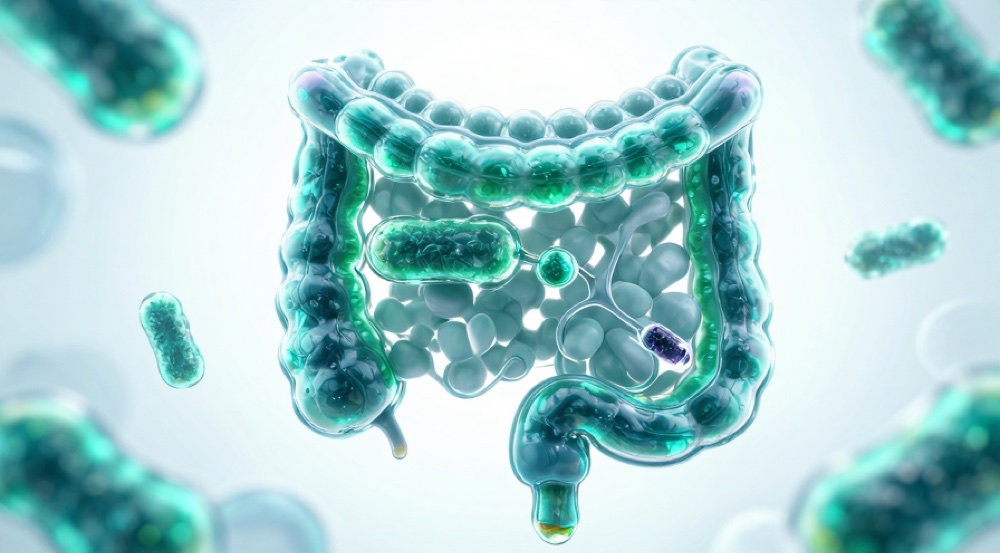
Gut Comfort & IBS
Where digestive symptoms and the brain feed back on each other — the best-established gut-brain territory.
Test it on yourself
Population studies tell you what happens on average. They can't tell you what happens to you. That's what the tracker is for — one change, three daily readouts, a few weeks, and an answer about your own body.
🧪 Start an experiment
Pick one intervention, choose three metrics, log a minute a day. Free, private, and yours to export whenever you want it.
🎛️ Run the model first
Try an intervention against the Neurobiome model before you commit weeks of your life to it.
🔬 New research, daily
Fresh gut-brain primary literature, scored and summarised as it publishes — so you're reading the papers, not the press release about the papers.
Where the honest limits are
The gut-brain axis is a real and well-evidenced system, and it is also a field where the marketing has run well ahead of the data. Human trials are mostly small and short. Strain-level effects rarely transfer between studies. A mouse result is not a human result. We write the caveats into the articles rather than the footnotes, and when the honest answer is "we don't know yet", that is what the page will say.