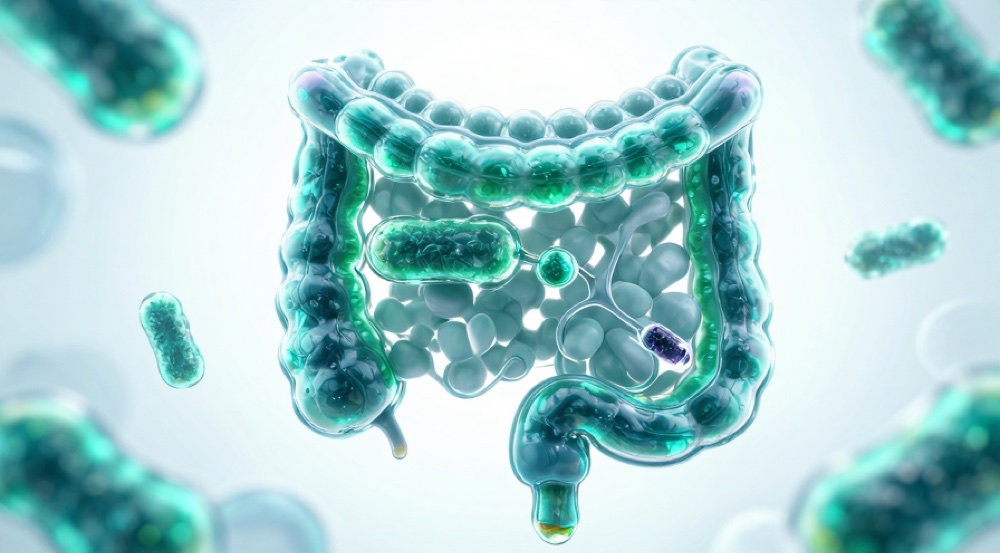
Short-chain fatty acids (SCFAs) — chiefly butyrate, propionate and acetate — are produced when gut bacteria ferment dietary fibre. Far from waste, these molecules are signalling compounds that reach the brain, and are leading candidates for how the microbiome exerts influence at a distance.
Building the blood-brain barrier
Braniste and colleagues (2014) showed the gut microbiota influences the integrity of the blood-brain barrier — the sealed lining controlling what enters the brain. Germ-free mice had a more permeable ("leaky") barrier; colonising them with normal bacteria, or giving butyrate directly, tightened it.[1]
Keeping the brain's immune cells in shape
Erny and colleagues (2015) showed the microbiota is required for normal maturation of microglia, the brain's resident immune cells. Germ-free mice had malformed, immature microglia — largely corrected by restoring a microbiota or simply supplying SCFAs.[2] A 2019 review by Dalile and colleagues mapped how SCFAs act in gut-brain communication, while noting direct human causal evidence is still limited.[3]