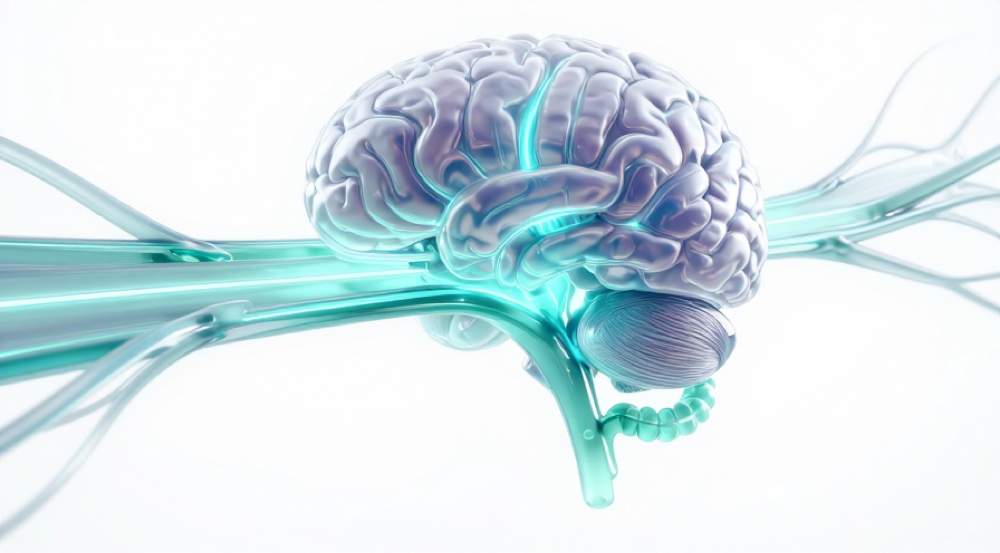
Calling the gut a "second brain" sounds like a slogan, but it points at something real: the gut wall contains its own extensive nervous system — the enteric nervous system — that can run local reflexes on its own, and the microbes living inside it produce and regulate the very chemicals your brain uses to signal. It isn't a brain that thinks. It's a chemical control centre wired directly to the one that does.
Where the "second brain" idea comes from
The most concrete evidence is chemical. The overwhelming majority of the body's serotonin — a signalling molecule central to mood — is made not in the brain but in the gut, and specific gut bacteria directly drive that production.[1] The metabolism of tryptophan, serotonin's precursor, is a shared crossroads of gut, microbes and brain.[2] Other gut bacteria produce or consume GABA, the nervous system's main calming transmitter.[3] The gut isn't just digesting — it's running a neurochemical factory.
How the two brains talk
The link between them is the vagus nerve, a direct line that carries far more traffic upward (gut → brain) than down.[4] That's the physical basis for the whole gut-brain axis: what the "second brain" and its microbes produce becomes information the first brain acts on — shaping mood, stress and appetite.
Why it matters for you
If much of your serotonin and calming chemistry is produced in the gut by bacteria, then which bacteria you carry is not a trivial detail. A gut depleted of these neuroactive species is a quieter factory. Seeing which ones are present is now measurable — clinical microbiome testing maps the neurotransmitter-linked species this article describes.
What is the enteric nervous system (the "second brain")?
The enteric nervous system is the dense mesh of an estimated 100–500 million neurons embedded in the wall of your gut — more than in the spinal cord — which is why the gut is nicknamed the "second brain." It can run local digestive reflexes on its own, without instructions from the head, and it communicates with the brain along the vagus nerve. It does not think or feel; it is a chemical-and-reflex control centre (Cryan et al., 2019, PMID 31460832).